2026-06-22
Tokyo Go-Kart Requirements: Age, Height, Weight and Documents
Exactly what you need to drive a Tokyo street go-kart: the 18-plus age rule, the license and IDP documents, and the truth about height and weight limits (they are operator guidance, not law).
 By Mia Nakamura, licensed Tokyo guide since 2022
Before you book one of the Tokyo street go-kart tours, it helps to know in one place whether you actually qualify, because the requirements are a mix of hard law and softer operator guidance, and people muddle the two. I check these against documents every day, so here is the clear version, with the part that is genuinely flexible flagged as such.
What are the requirements to drive a Tokyo go-kart?
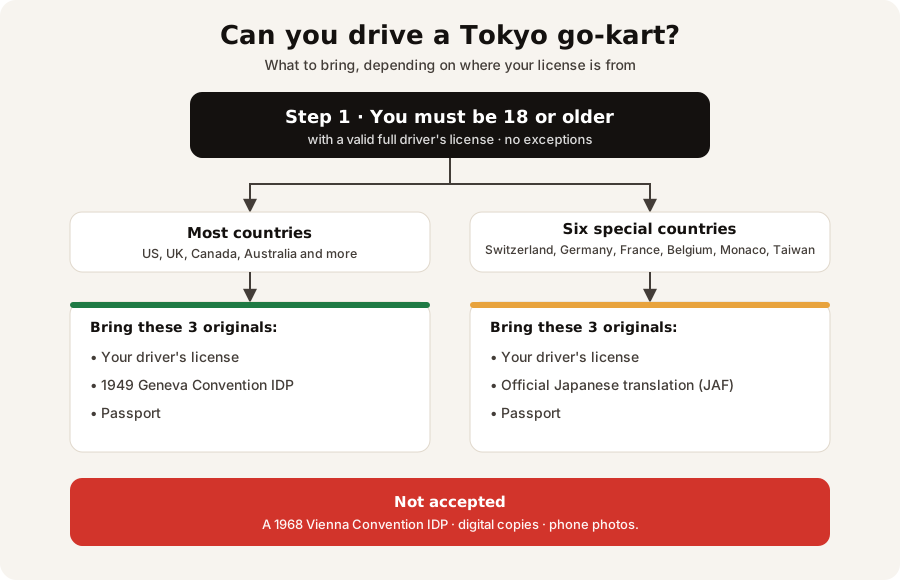
You must be at least 18 and hold a valid home-country driver's license plus a 1949 Geneva International Driving Permit (or an official Japanese translation if you are from six specific countries), carried as paper originals with your passport. Height and weight limits, where they exist, are operator comfort guidance rather than law.
So there are two layers. The legal layer is firm: age, license, and the right permit, no exceptions. The comfort layer, mainly height and weight, varies by operator and is about fitting and enjoying the kart, not about breaking a rule.
Get the legal layer right and you still need to meet the operator’s suitability requirements. The rest is worth a quick check against your specific booking, which I will break down below.
Do you qualify? Quick reference
| Requirement | What you need |
|---|---|
| Age | 18 or older, no upper limit |
| License | Valid home-country driver's license |
| Permit | 1949 Geneva IDP, or a JAF Japanese translation (6 countries) |
| Also bring | Passport, everything as paper originals |
| Height / weight | Operator comfort guidance only, varies by tour |
The legal layer (age, license, permit) is fixed; height/weight is comfort guidance.
Is there a minimum or maximum age?
The minimum age is 18, set by Japanese public-road law, with no exceptions and no way around it. There is no maximum age, so older travelers are welcome as long as they hold a valid license and can drive safely.
Eighteen is the legal driving age, and because the tour is genuine road driving, that limit applies in full. A younger driver cannot take part even with a license from a country that permits driving earlier, and children cannot ride along, since the karts are single-seaters. If you are travelling with under-18s, our guide on whether kids can go-kart in Tokyo covers the alternatives.
At the other end, there is no upper cap. If you are fit to drive and your documents are in order, age is not a barrier, though the low seat and live traffic are worth an honest self-check for any driver. Older travelers can read more in our take on Tokyo go-karting for seniors.
Is there a height or weight limit?
Not in law. Some operators suggest a comfortable range, often roughly 150 to 185 cm and under about 100 kg, while others state no firm limit. Treat these as guidance for fit and comfort, and check the specific tour's terms when you book.
The reason for any guidance is practical: you need to fit comfortably in a low kart and reach the controls. Very tall or heavier drivers are not necessarily excluded, but they may find the fit snug or the kart a little less peppy, which is worth knowing rather than discovering at the shop.
Because this varies between operators and can change, do not treat any single figure as universal. The honest move is to read the requirements on the exact tour you are booking, and to ask if you are unsure where you fall.
What documents do you need to bring?
Bring three originals on the day: your home-country driver's license, your 1949 Geneva IDP or official Japanese translation, and your passport. Digital copies and phone photos are not accepted, and without valid originals you cannot drive and cannot get a refund.
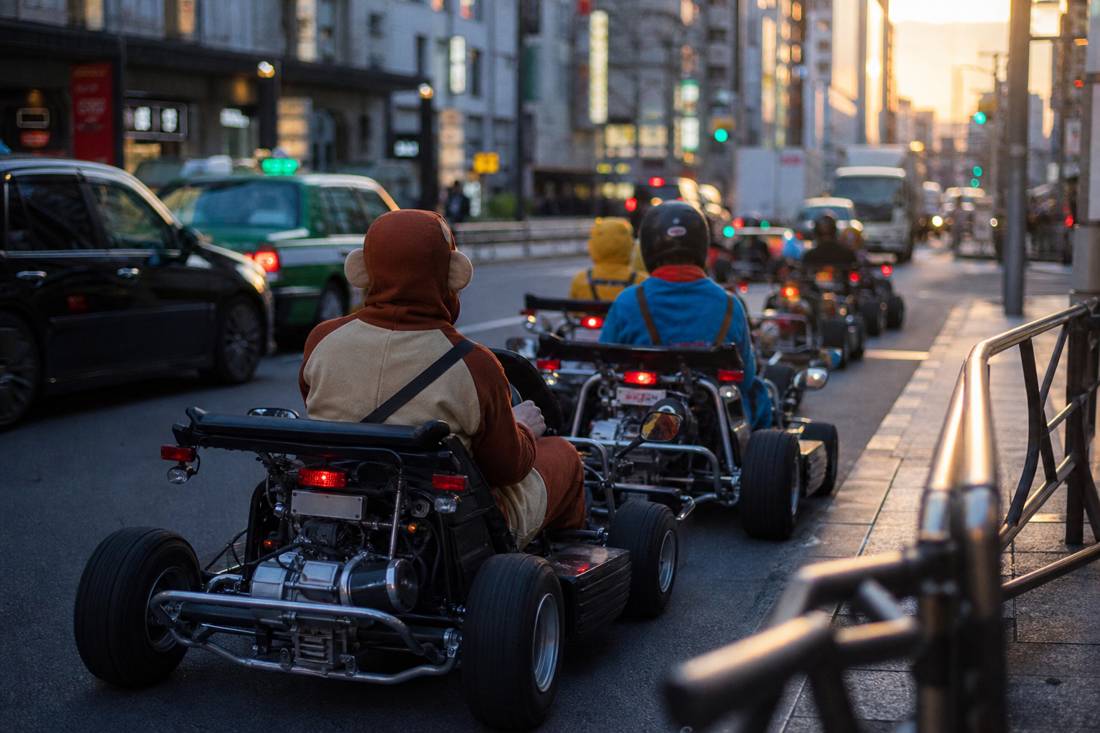
This is the requirement that catches the most people, so it is worth over-preparing. The IDP must be the 1949 Geneva Convention version, obtained in your home country before you travel, since you cannot get one in Japan. The rules for driving in Japan on a foreign licence (JAF) and the official list of accepted permits from the Tokyo Metropolitan Police both spell this out. Drivers from Switzerland, Germany, France, Belgium, Monaco, and Taiwan bring an official Japanese translation instead.
What to bring on the day:
| Item | Detail |
|---|---|
| Home-country driver's license | The valid original, not a copy or photo |
| 1949 Geneva IDP or JAF translation | Paper original; a translation instead for the six exception countries |
| Passport | The physical passport, carried with the other two |
| Closed-toe shoes | Required to drive; worn on the day, not handed over |
No valid originals means no ride and no refund, so over-prepare rather than risk the day.
For the full walkthrough, including where to get an IDP and how the translation works, see our Tokyo go-kart license guide. It is the one piece of admin that decides whether your day happens.
Which permit by where your license is from:
| Your license is from | What you bring |
|---|---|
| Most countries | A 1949 Geneva IDP plus your home license and passport |
| Switzerland, Germany, France, Belgium, Monaco, Taiwan | An official JAF Japanese translation instead of a Geneva IDP |
| A country that issued a 1968 Vienna IDP | A 1968 Vienna IDP is not accepted in Japan |
What else should you be ready for?
Wear closed-toe shoes, skip loose or flowing clothing, and be prepared to drive sober and phone-free. These are not paperwork requirements, but they are non-negotiable on the day, and getting them wrong can also stop you driving.
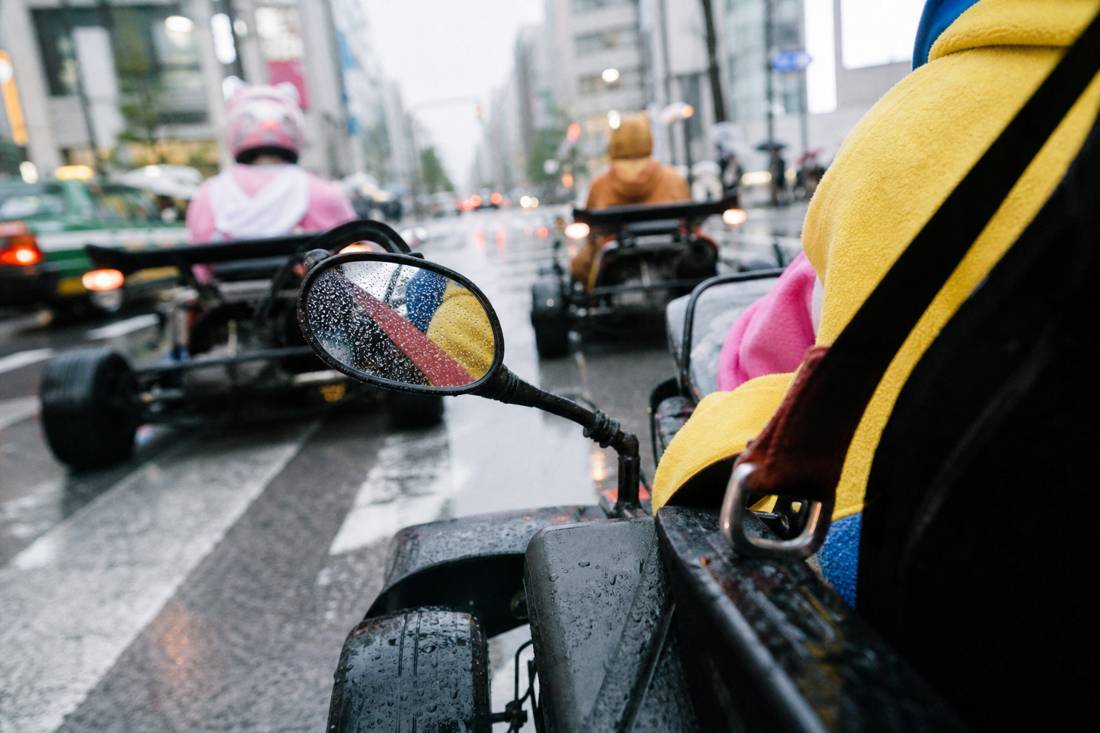
Closed-toe shoes are required, and anything that could catch in the kart, such as long scarves or skirts, is not allowed. You will also be expected to drive completely sober, and you cannot use a phone while driving, which is the law.
None of this is onerous, but it is worth planning, so I have put the full practical list in our what to wear and bring guide. Sort the documents and the dress code together and there are no surprises.
So, do you qualify?
If you are 18 or over, hold a valid license and the correct IDP or translation, and can comfortably fit and drive a low kart, then yes, you qualify. Age, documents and the operator’s physical suitability requirements all matter.
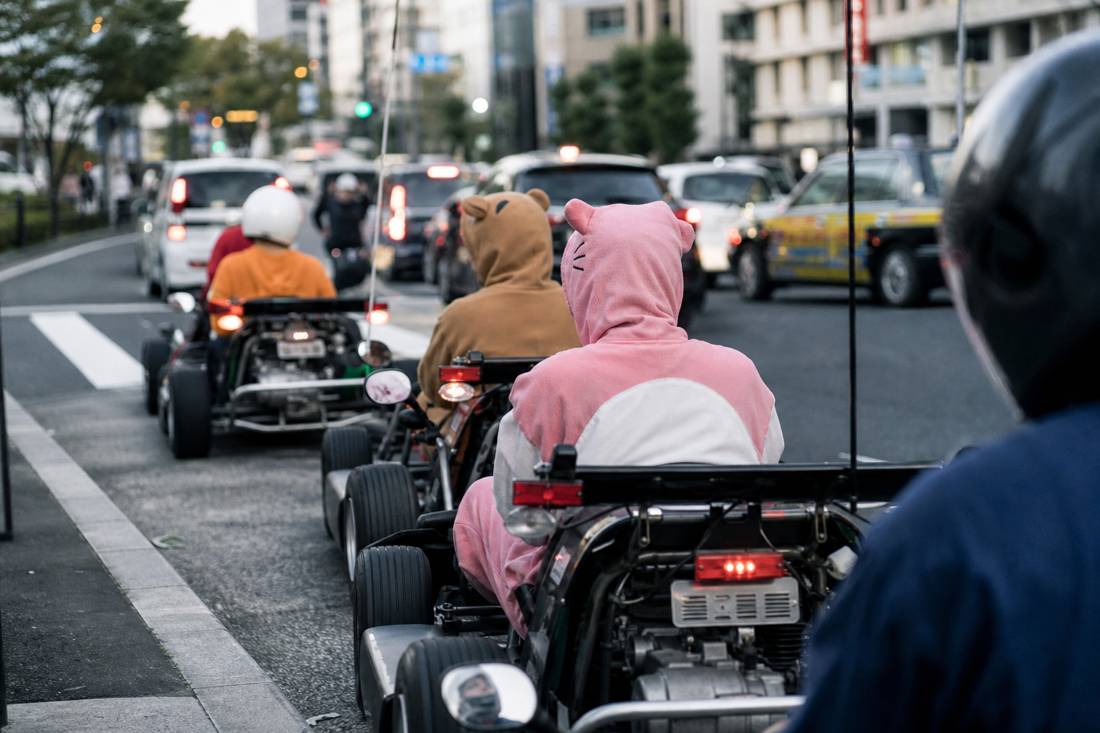
Run yourself through the legal layer first, since that is the one that is fixed, then sanity-check the comfort layer against your specific booking. Clear both and you are ready, and the tour comparison will help you choose the route that suits you best, whether that is the neon Akihabara circuit or a quieter guided electric kart tour.
If it is your first time, our first-timer guide to Tokyo go-karting walks you through what the day actually feels like.
Choose Your Tokyo Kart Experience
Initial editorial recommendation. Use the optional choices to find a closer fit; eligibility is confirmed by the operator.
Match The Experience To Your Plans
Tokyo Guided Electric Kart Tour: Take a 50-minute electric kart route through Shibuya, Harajuku and Omotesando with photo support. 50 minutes.
Official Street Go-Kart Tour - Akihabara: Follow a guided kart route through Akihabara, Ginza and Tokyo Station. 60–90 minutes, plus arrival 30 minutes early.
Tokyo Shibuya Crossing & Hidden Streets Walking Tour: Explore the crossing, Hachiko, Miyashita Park and hidden neighborhood streets on foot. 2 hours.
Yomiuriland Park Pass: Plan an off-road family park day with Yomiuriland’s family go-kart attraction. Park day, allow additional travel time.
Official Street Go-Kart in Shibuya
Have a travel date in mind? Drive Shibuya Crossing, Harajuku and Omotesando with a guide and photo support. Check your date before arranging the rest of your day.
60–90 minutes, plus arrival 30 minutes early · English
Meeting Point, Inclusions And Restrictions
We are on the street level with neon signs. Returns to meeting point
Includes: All taxes, fees and handling charges; Lead guide in a Kart; Costume Rental Fee; Kart Rental Fee; Fuel surcharge
Extras: Hotel pickup and drop-off; Food and drinks; Gratuities; Full Coverage Insurance Fee
Not recommended for travelers with spinal injuries; Not recommended for travelers with poor cardiovascular health; Not recommended for pregnant travelers; You MUST inform us if you have any level of hearing impairment or mobility impairment.
Adults 18+ only. Required original driving documents and operator approval of suitability apply. No passengers. Public-road driving is not a race or a risk-free activity.