2026-06-22
First-Timer's Guide to Driving a Go-Kart in Tokyo Traffic
Nervous about driving a go-kart in Tokyo traffic? A licensed guide explains what it's really like for beginners, how to calm the first-lap nerves, and why the electric kart is the easiest start.
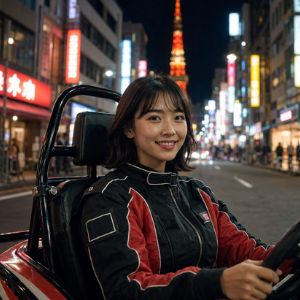 By Mia Nakamura, licensed Tokyo guide since 2022
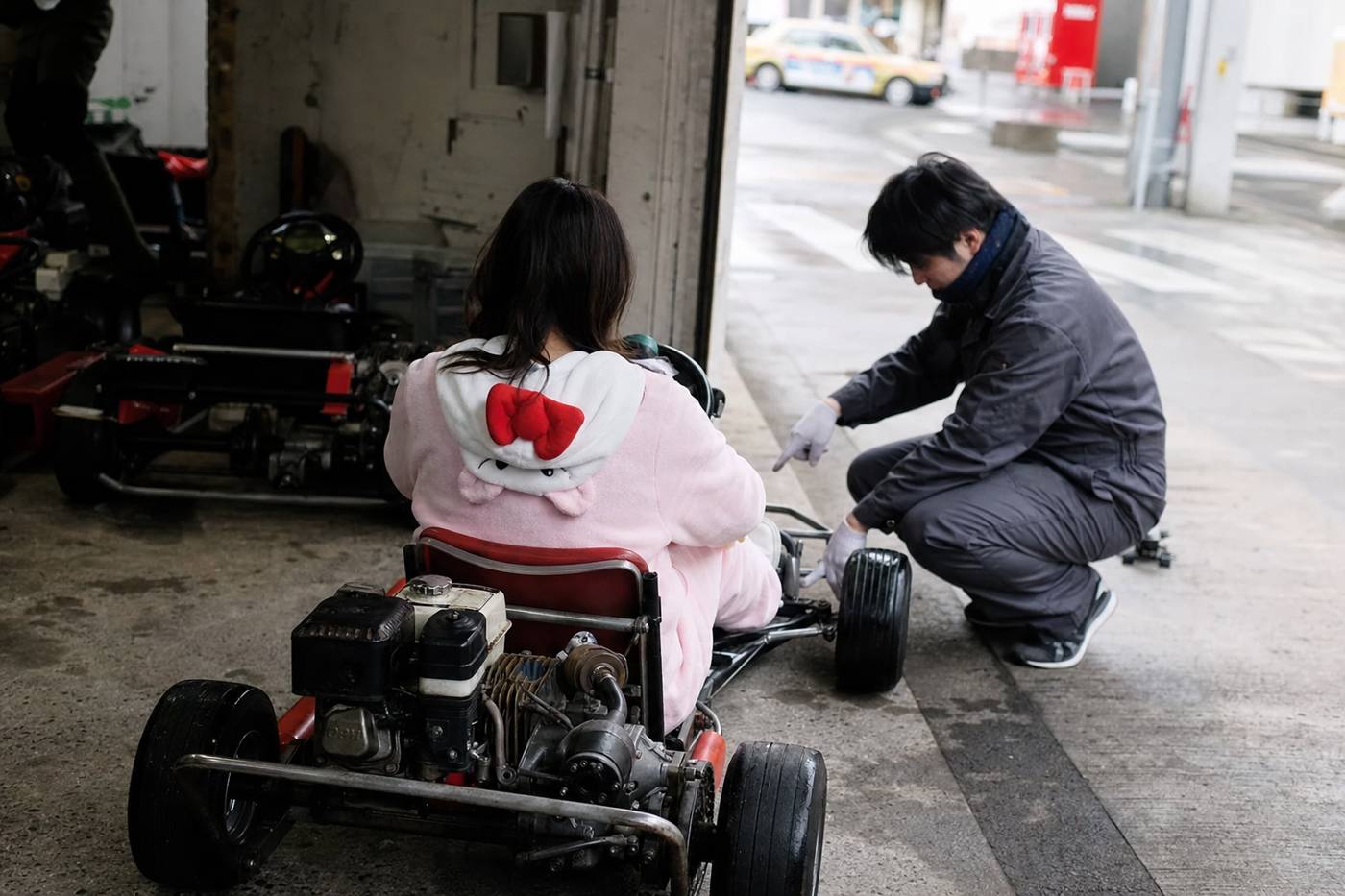
The most common thing I hear at the shop is not excitement, it is nerves: "I have never driven anything like this." Good news, that is completely normal, and first-timers make up a big share of the people who finish the tour beaming. Here is an honest guide to what the driving is actually like, how to make your first go an easy one, and which of the Tokyo go-kart tours suits a beginner best.
Is Tokyo go-karting hard for first-time drivers?
No, not for anyone comfortable driving a normal car. The karts are simple, the speeds are low, and a guide leads the whole way at a calm pace. The challenge is nerves and traffic, not skill, and a proper briefing plus the right tour settles most of that before you move.

If you can drive a regular car, you already have the hard part. There is no complicated technique, no racing, and no pressure to go fast. You press the pedal gently, steer, and follow the guide, who picks the route and the gaps for you.
What trips beginners up is psychological, not mechanical. The first time a bus passes while you sit low to the road, your pulse jumps. That fades fast once you realise the guide has set a manageable pace and you are not expected to keep up with traffic, just flow with it. If the safety side is what worries you most, I dug into it separately in is Tokyo go-karting safe.
How the first lap usually goes
| Stage | What happens | How you'll feel |
|---|---|---|
| First block | Getting used to the low kart | Tense, gripping the wheel |
| Mid-route | Following the guide's pace | Settling in |
| The Crossing | The headline moment | Grinning, waving |
| Back at the shop | Hand back the costume | Wanting to go again |
The typical arc Mia sees with first-timers, tour after tour.
What is the driving actually like for a beginner?
Slow, low, and more relaxed than it looks. You spend the hour following a guide in a small convoy at city speeds, stopping at the same lights as everyone else. The novelty is sitting inches off the road, not speed, so it feels exciting without ever feeling out of control.
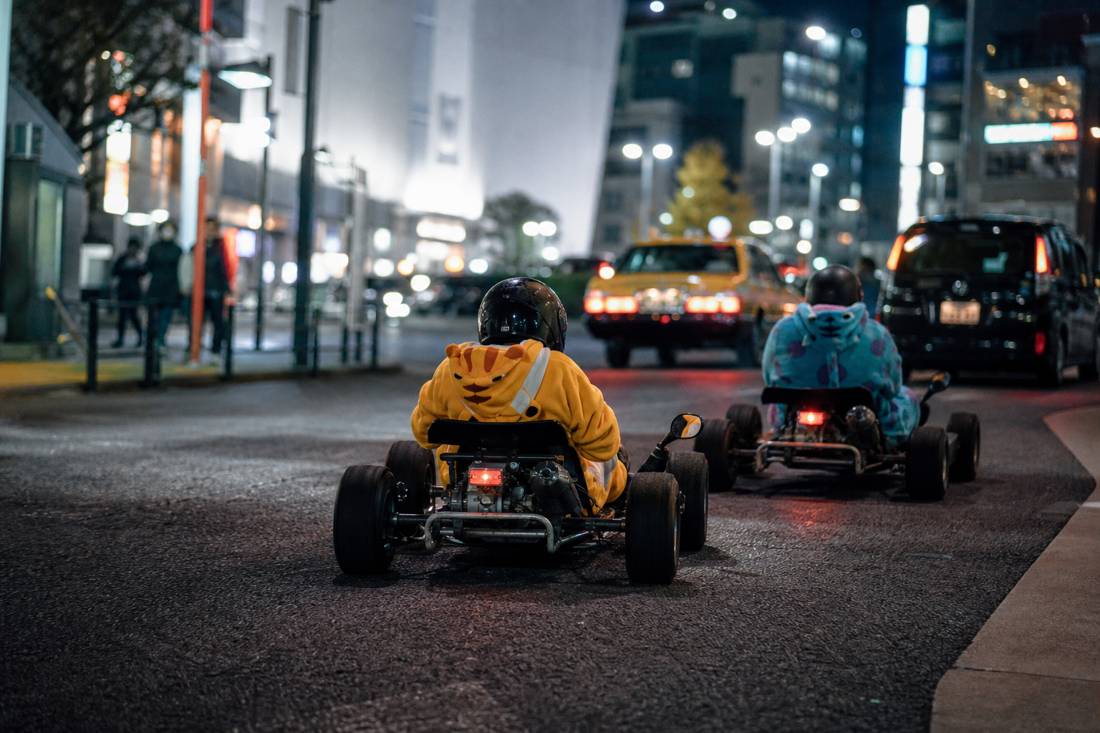
The first few minutes are the steepest part of the learning curve. You get used to the low seat, the light steering, and the feel of the pedal, usually within a block or two. After that, most people relax enough to start looking around instead of gripping the wheel.
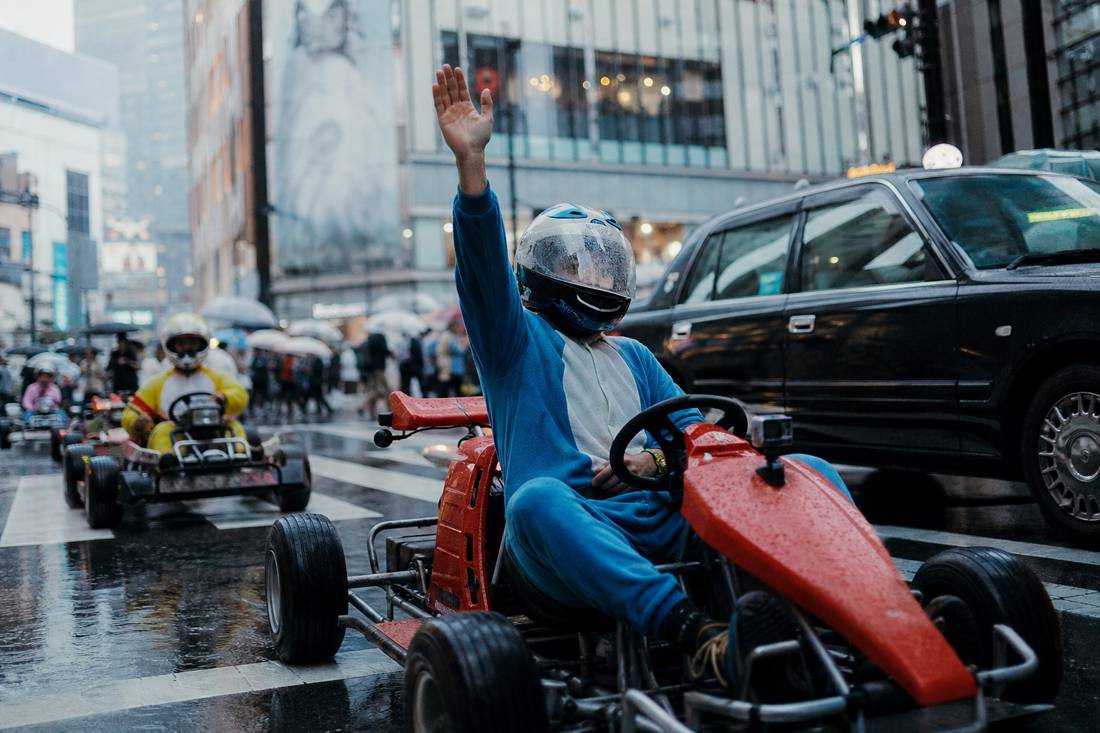
By the halfway point the typical first-timer has stopped concentrating hard and started enjoying it, waving at pedestrians and taking in the city. That shift from tense to delighted is the normal arc, and guides expect it.
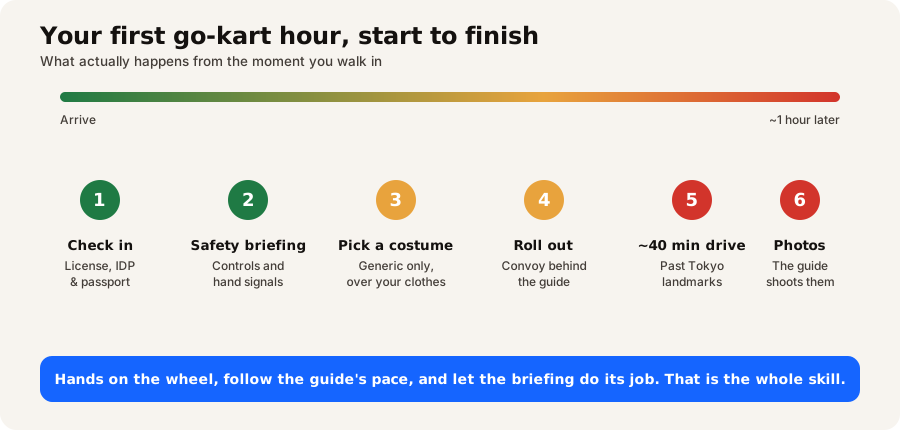
Here is the same first hour broken into the order it actually happens, step by step.
| Step | What happens |
|---|---|
| Check-in | You show your license, IDP, and passport at the shop |
| Briefing | The guide runs through the controls and the hand signals |
| Costume | You pick a costume, which is included in the price |
| Convoy | You roll out behind the guide in a small convoy |
| Driving | About forty minutes following the guide past the landmarks |
| Photos | The guide shoots photos of you along the way |
Which tour is best for nervous first-timers?
The electric kart. It is quieter, smoother, and gives power gently and predictably, with no engine roar, on a route that also includes Shibuya Crossing. It remains public-road driving through the crossing, so it is not a way to avoid busy traffic.
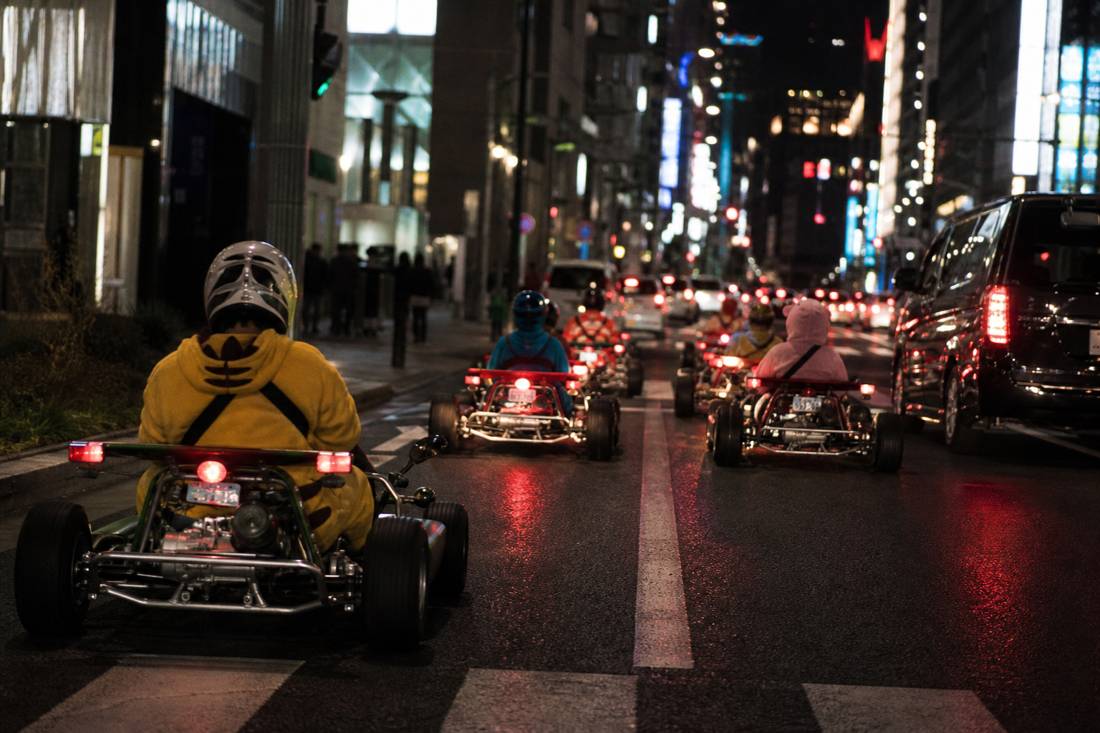
The smooth, instant power is the key. Petrol karts can feel a little jerky off the line, which rattles a nervous driver, while the electric kart pulls away cleanly every time. The quiet also means you can hear your guide, which is reassuring when you are unsure.
You can always graduate to the Shibuya Street Kart Experience later if you catch the bug, or try the cheaper Akihabara go-karting run. The comparison page shows why the routes differ.
How do you calm the first-lap nerves?
Listen closely to the briefing, ride near the back so you set your own pace, tell your guide you are nervous, and breathe through the first two minutes. The nerves almost always pass within the first block once you feel how slow and controlled it really is.
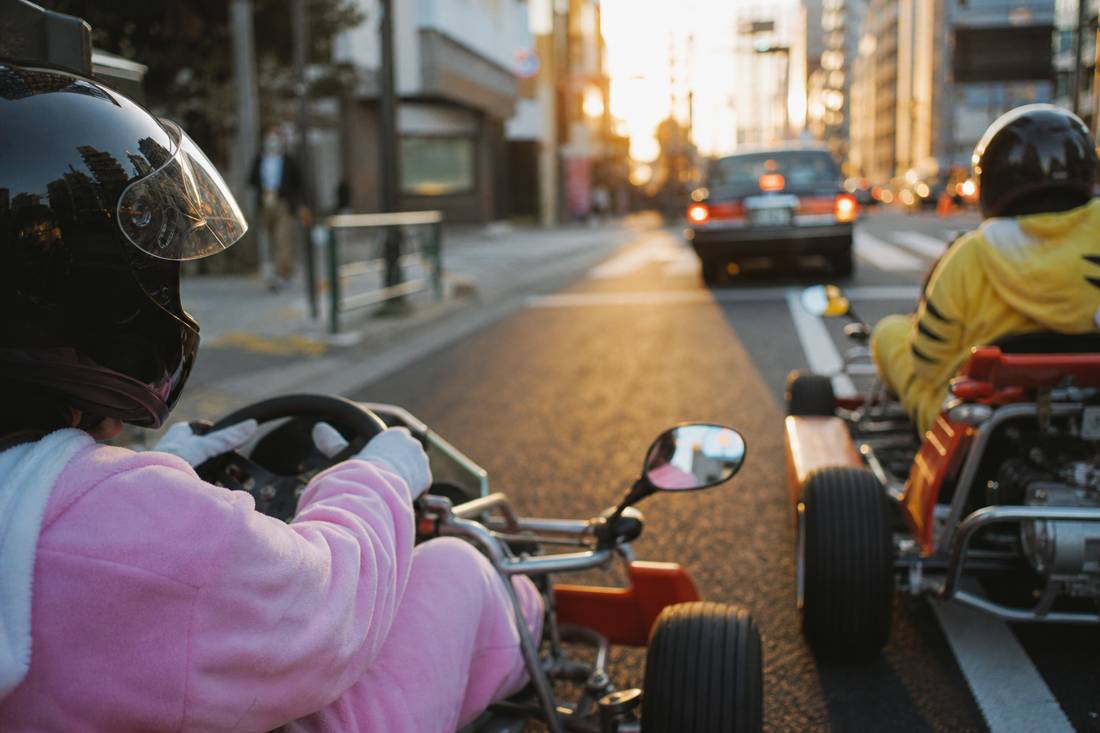
Telling your guide is the single best move. We adjust the pace, keep a closer eye on you, and reassure you at the lights, and none of that happens if you hide the nerves. There is no judgement; a chunk of every group is first-timers.
Sitting toward the back means nobody is pushing you and you can leave a comfortable gap to the kart ahead. Add a slow breath or two as you roll out, and the worst of it is over before you have left the first street. It also helps to turn up comfortable: see what to wear for a Tokyo go-kart so clothing is one less thing on your mind.
What do first-timers most often get wrong?
Three things: forgetting the documents, expecting to use a phone while driving, and assuming it is a race. Sort your license and IDP in advance, plan your photos around hands-free rules, and come for the experience rather than speed, and you avoid all three. The full Tokyo go-kart requirements are worth a read before you book.
The documents are the big one, and they are not a beginner-specific mistake so much as the universal one: no valid originals means no drive. Our license guide covers exactly what to bring, and the official JAF rules on driving in Japan spell out which countries need an International Driving Permit.
The other two are mindset. You cannot touch a phone at the wheel, so decide your camera plan early, and you are not trying to win anything, so let the guide set the pace and just enjoy the ride.
A quick checklist of what to do and what to skip as a first-timer.
| Do | Avoid |
|---|---|
| Sort your license and IDP in advance | Showing up without the original documents |
| Check dates before fixing other timed plans | Leaving the booking to the last minute |
| Let the guide shoot your photos | Trying to use a phone at the wheel |
| Tell your guide you are nervous | Hiding the nerves and gripping in silence |
| Ride near the back and set your own pace | Treating it as a race to keep up with traffic |
So, can a nervous driver do it?
Yes, very likely. If you can drive a car and follow instructions, you can do this, and the electric kart makes the first time an electric option through the same busy district. If dense traffic genuinely frightens you rather than just making you nervous, that is a fair reason to skip it, and an indoor track is the calmer alternative.
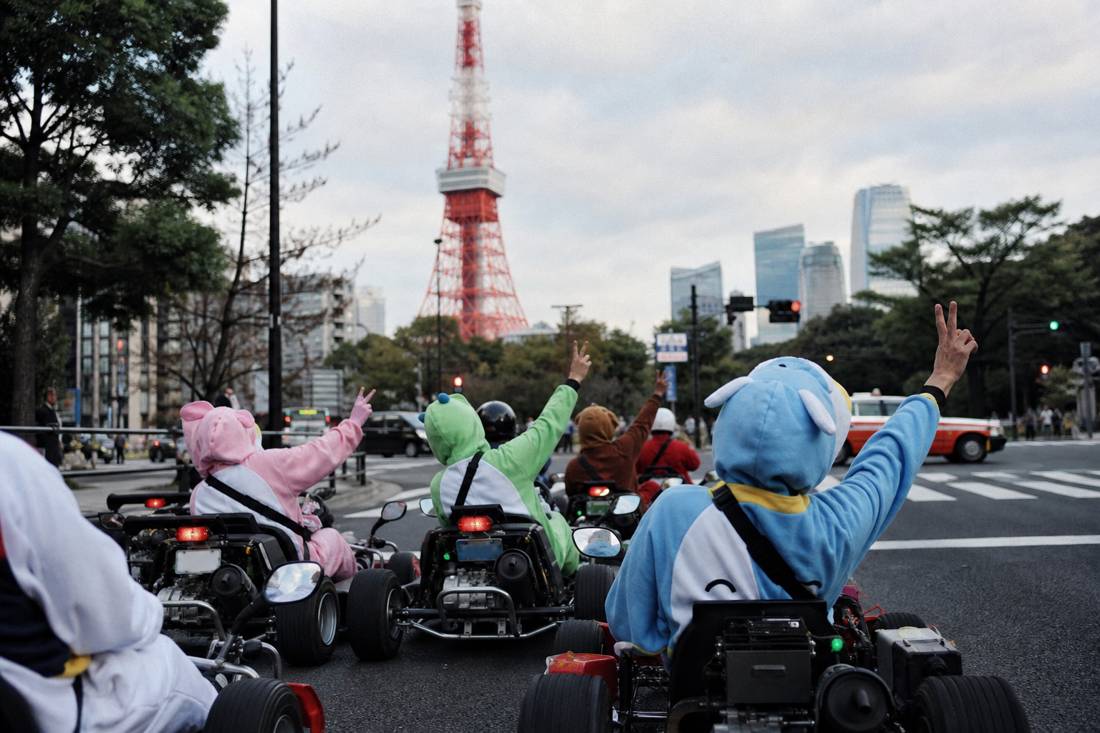
Nervous is normal and fine; frightened is worth respecting. Most first-timers land firmly in the first camp and have a brilliant time once the opening block is behind them. Start with the electric kart, tell your guide, and give yourself permission to enjoy it. And if you are still on the fence, is Tokyo go-karting worth it lays out the honest case either way.
Choose Your Tokyo Kart Experience
Initial editorial recommendation. Use the optional choices to find a closer fit; eligibility is confirmed by the operator.
Match The Experience To Your Plans
Official Street Go-Kart in Shibuya: Drive Shibuya Crossing, Harajuku and Omotesando with a guide and photo support. 60–90 minutes, plus arrival 30 minutes early.
Official Street Go-Kart Tour - Akihabara: Follow a guided kart route through Akihabara, Ginza and Tokyo Station. 60–90 minutes, plus arrival 30 minutes early.
Tokyo Shibuya Crossing & Hidden Streets Walking Tour: Explore the crossing, Hachiko, Miyashita Park and hidden neighborhood streets on foot. 2 hours.
Yomiuriland Park Pass: Plan an off-road family park day with Yomiuriland’s family go-kart attraction. Park day, allow additional travel time.
Tokyo Guided Electric Kart Tour
Have a travel date in mind? Take a 50-minute electric kart route through Shibuya, Harajuku and Omotesando with photo support. Check your date before arranging the rest of your day.
50 minutes · English
Meeting Point, Inclusions And Restrictions
Meeting Point Tokyo Z is located on the 1st floor of Shoko Building in Sakuragaokacho, Shibuya. It is a 5-minute walk from Shibuya Station (West Exit). Look for the “Tokyo Z” sign at the entrance. Returns to meeting point
Includes: Private transportation; Admission fee; Kart damage insurance
Extras: Go-Pro; Insta 360°; SD card
Not recommended for pregnant travelers
Adults 18+ only. Required original driving documents and operator approval of suitability apply. No passengers. Public-road driving is not a race or a risk-free activity.